Phosphoric Acid
Phosphoric Acid

Phosphoric Acid

MOQ : 500 Kilograms

Phosphoric Acid Specification

  • Smell
  • Odorless
  • Form
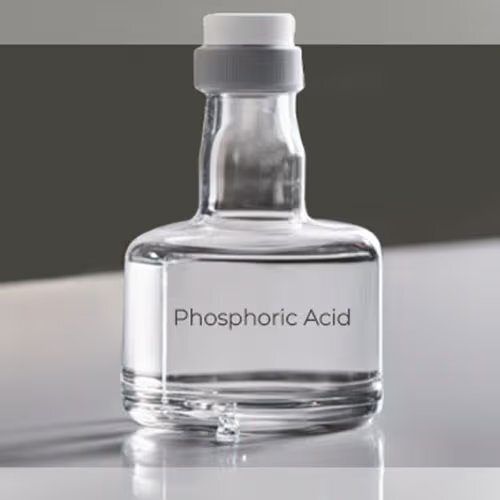
  • Clear, colorless, syrupy liquid
  • Poisonous
  • Yes
  • Purity
  • 85% (common commercial purity)
  • HS Code
  • 28092010
  • Shape
  • Liquid (mainly), also available as solid (crystals)
  • Solubility
  • Soluble in water, alcohol, and ether
  • Ph Level
  • <1 (for concentrated solution)
  • Taste
  • Acidic, sour
  • Other Names
  • Orthophosphoric acid, E338
  • Storage
  • Store in cool, dry, well-ventilated area, away from incompatible substances
  • Melting Point
  • 42.35 C (anhydrous)
  • Molecular Formula
  • H3PO4
  • Structural Formula
  • H-O-P(=O)(OH)2
  • Refractive Rate
  • 1.433 (at 20C, 85% solution)
  • Molecular Weight
  • 98.00 g/mol
  • Density
  • 1.685 Gram per cubic centimeter(g/cm3)
  • Boiling point
  • 158 C (decomposes)
  • Classification
  • Inorganic acid, Corrosive
  • Chemical Name
  • Phosphoric Acid
  • CAS No
  • 7664-38-2
  • EINECS No
  • 231-633-2
  • Grade
  • Industrial grade, food grade, laboratory grade
  • Standard
  • Conforms to ISO/ASTM/Analytical standards, depending on grade
  • Type
  • Inorganic Acid
  • Usage
  • Chemical reagent, food acidulant (E338), metal treatment, pharmaceutical applications
  • Main Material
  • Phosphorus, oxygen, hydrogen (source: phosphate rock or elemental phosphorus)
  • Application
  • Used in fertilizer production, food additive, dental and industrial cleaning, rust removal, and water treatment plants
  • Non Toxic
  • Yes
  • Compatibility
  • Incompatible with alkalis, strong bases, and cyanides
  • Packing
  • HDPE drums, carboys, bulk tankers
  • Viscosity
  • 1.6 Poise at 20C (85% solution)
  • UN Packing Group
  • III
  • Decomposition Products
  • Toxic fumes of phosphorus oxides under fire conditions
  • Transport Hazard Class
  • Class 8 (corrosive substances)
  • Auto-Ignition Temperature
  • Non-flammable
  • Shelf Life
  • 2 years (if stored properly)
  • Flash Point
  • Non-flammable
  • UN Number
  • 1805
  • Hazard Statement
  • Causes severe skin burns and eye damage
  • Appearance
  • Clear, colorless to slightly yellow, syrupy liquid
 

Phosphoric Acid Trade Information

  • Minimum Order Quantity
  • 500 Kilograms
  • Delivery Time
  • 7 Days
  • Main Export Market(s)
  • Central America, Eastern Europe, South America, North America, Middle East, Asia, Australia, Western Europe, Africa
 

About Phosphoric Acid


Reserve your supply of Phosphoric Acid-a noble inorganic acid acclaimed for its preeminent quality and unmatched purity (85%, commercial grade). Sourced from premier phosphate rock or elemental phosphorus, its unassailable chemical properties make it vital in fertilizers, food additives (E338), pharmaceutical, and metal treatment industries. Clear, colorless to slightly yellow, and syrupy, this scarce commodity is packed in robust HDPE drums, carboys, or bulk tankers. Hazard: Causes severe burns and eye damage; treat with utmost care. Storage ensures 2 years' shelf life.

Extra Features and Broad Utility

Phosphoric Acid's versatility extends to water treatment, rust removal, and industrial cleaning. This clear, non-flammable, highly acidic liquid is delivered in packaging designed for rigorous industrial processes. Its compatibility is limited-avoid mixing with alkalis or cyanides. In addition to standard use cases, it excels as a laboratory reagent, food acidulant (E338), and is integral in pharmaceutical and dental applications, reinforcing its status as an essential, multi-purpose resource.


Export Markets, Terms, and Certifications

Phosphoric Acid enjoys global demand, especially across Asia, Africa, and Europe-India is a major supplier. Upon arrival, strict ISO/ASTM certifications assure its quality. Adaptive sale price models and established payment terms (LC, TT, advance) ensure seamless international transactions. Secure, compliant packaging and careful transport under UN Class 8 (corrosive) standards guarantee safe and timely delivery to customers, enhancing trust and reliability in the export journey.


FAQ's of Phosphoric Acid:


Q: How should Phosphoric Acid be safely stored and handled?

A: Store Phosphoric Acid in a cool, dry, well-ventilated area, away from incompatible substances such as alkalis, strong bases, and cyanides. Always handle wearing appropriate safety gear to prevent severe skin burns and eye damage.

Q: What are the main applications of Phosphoric Acid across industries?

A: Phosphoric Acid is widely used in fertilizer production, as a food additive (E338), for dental and industrial cleaning, rust removal, water treatment, metal treatment, and as a pharmaceutical and laboratory reagent.

Q: Where is your Phosphoric Acid primarily exported and what certifications support its quality?

A: We export Phosphoric Acid mainly to Asia, Africa, and Europe. Our products conform to stringent ISO, ASTM, and analytical standards, depending on the grade, ensuring international quality compliance.

Q: When does Phosphoric Acid expire and what factors may affect its shelf life?

A: Phosphoric Acid has a shelf life of 2 years if stored properly, away from heat, moisture, and incompatible materials. Improper storage can reduce its efficacy and safety.

Q: What precautions are necessary during the transport and arrival of Phosphoric Acid shipments?

A: Phosphoric Acid is transported as a Class 8 corrosive substance, UN 1805, in robust packaging like HDPE drums or bulk tankers. Careful adherence to international transport regulations ensures safety upon arrival.

Q: How can Phosphoric Acid benefit my industrial processes?

A: Its high purity and chemical stability make it indispensable for synthesizing fertilizers, treating metals, cleaning industries, and purifying water, contributing directly to operational excellence.

Tell us about your requirement
product

Price:

Quantity
Select Unit

  • 50
  • 100
  • 200
  • 250
  • 500
  • 1000+
Additional detail
Mobile number

Email

More Products in Industrial Chemicals Category

Acetic Acid

Acetic Acid

Minimum Order Quantity : 500 Kilograms

Classification : Other, Carboxylic acid

Storage : Other, Store in cool, wellventilated area away from incompatible substances (oxidizers, strong bases); keep container tightly closed

Other Names : Ethanoic acid, Vinegar acid, Glacial acetic acid

Structural Formula : CH3COOH

Molecular Formula : C2H4O2

Hydrogen Peroxide

Hydrogen Peroxide

Minimum Order Quantity : 500 Kilograms

Classification : Other, Oxidizing agent, bleaching agent, disinfectant

Storage : Other, Cool, dry place, away from sunlight, in a vented container

Other Names : Peroxide, Dioxidane, Hydrogen dioxide

Structural Formula : HOOH

Molecular Formula : H2O2

Propylene Glycol

Propylene Glycol

Minimum Order Quantity : 500 Kilograms

Classification : Other, Organic chemical compound

Storage : Other, Store in a tightly closed container. Store in a cool, dry, wellventilated area away from incompatible substances.

Other Names : 1,2Propanediol, MPG

Structural Formula : CH3CHOHCH2OH

Molecular Formula : C3H8O2

Sodium Hypochlorite

Sodium Hypochlorite

Minimum Order Quantity : 500 Kilograms

Classification : Other, Oxidizing agent

Storage : Other, Store in cool, wellventilated area, away from sunlight and organic materials

Other Names : Liquid bleach, Hypochlorous acid, sodium salt

Structural Formula : NaOCl

Molecular Formula : NaOCl


Back to top